If you know me, you know my love of food. Not just eating it, but cooking and learning about it. Hence my love of dinners at a dear friend’s house in Lexington. He cooked, I interviewed him about how he cooked.
To that end, it should surprise no one that when the Palau Community College advertised a Japanese Cooking Class, I was one of the first to sign up.
***History Lesson*** After World War I, the League of Nations placed Palau under Japanese administration. From 1914-1944, Palau was part of Japan. Since then, it’s been a tourist destination for the Japanese. In fact, Japanese tourists make up a high percentage of total tourists. So it’s not surprising one finds Japanese cuisine here.
The class was scheduled to meet Mondays, Wednesdays, and Fridays for 2 weeks with each class being 2 hours. We met at PCC, in their hospitality building. Yes, PCC offers courses in hospitality. They have a kitchen built for demonstrations and classes, a bar set up to teach proper technique, and a room set with tables for students to learn proper table settings, how to serve, etc. It was the perfect place.
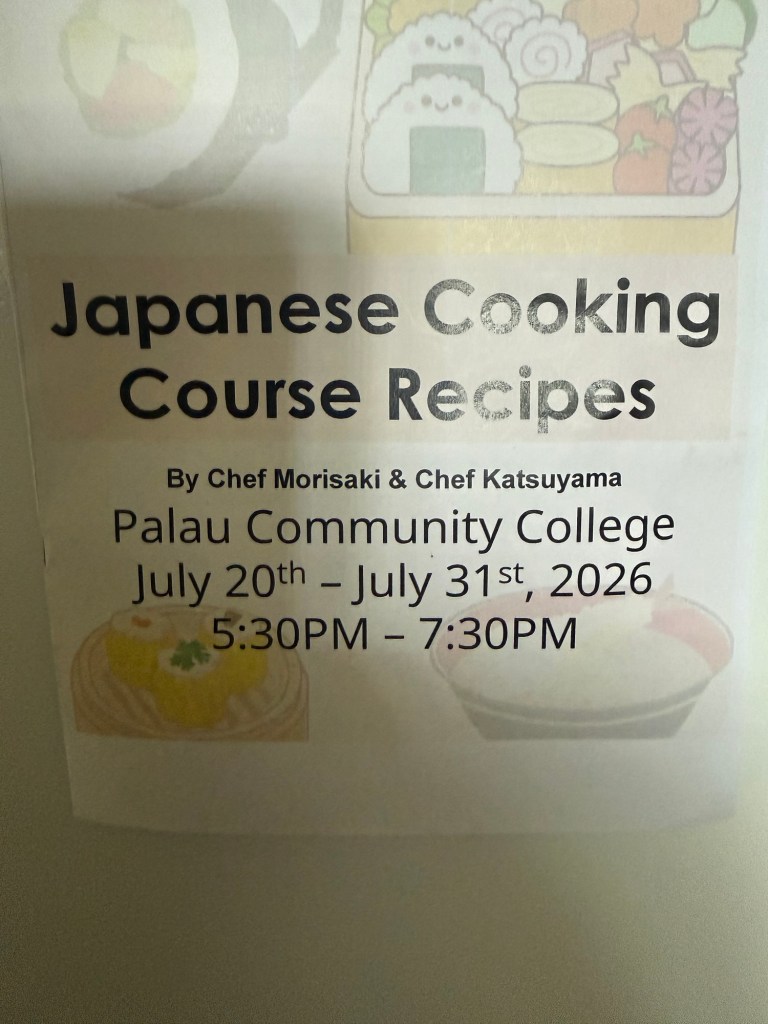
Class began with an introduction from our 2 instructors. Chef Morisaki has been in Palau for several years. She originally came to be chef at a local Japanese restaurant, Tori Tori. She recently left there to teach at PCC. Chef Katsuyama is the chef of the Ambassador of Japan.
There were 16 of us in the class, ranging from high school students to people of a certain age. Some were native Palauans, some were those of us living here from elsewhere, and a couple were people interning for only a few months here.
Lesson One: Nitsuke
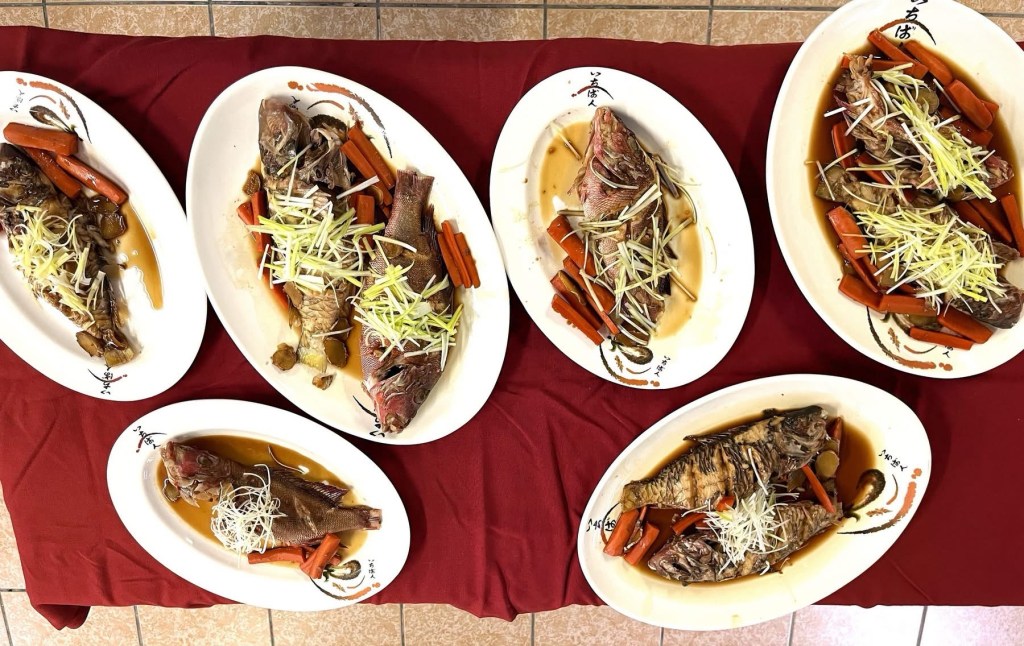
Nitsuke is a simmered whole fish with sauce. First thing we had to do? Clean the fish. The worst part of the cleaning? Those scales go flying when you start to use the scaler to take them off! I discovered them on my arm even after I got home. Also, many fish fins are pointy and hurt if you don’t handle it correctly. Now I understand why a shark’s teeth are so sharp! After cleaning the fish, you start your sauce. This one is soy, mirin, cooking sake, and some ginger. Cook the fish whole and then add some julienned leek on top!
Lesson Two: Sushi
I have nothing to show here as this was the same night as the Embassy dinner, and as the wife of a judge, I now have obligations. I do plan to try at home soon though.
Lesson Three: Tempura with Soba Noodles
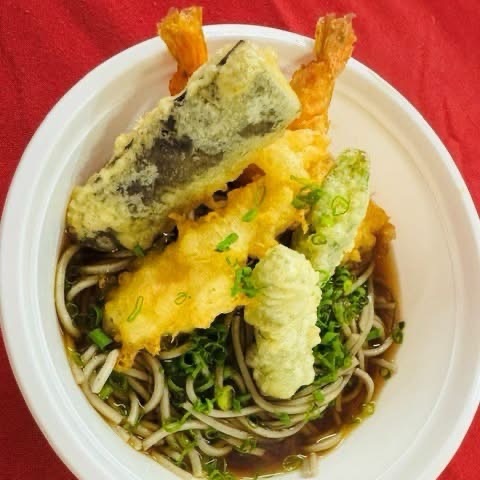
Hands down my favorite class. I liked them all, but this is something I could eat regularly and it wasn’t too hard.
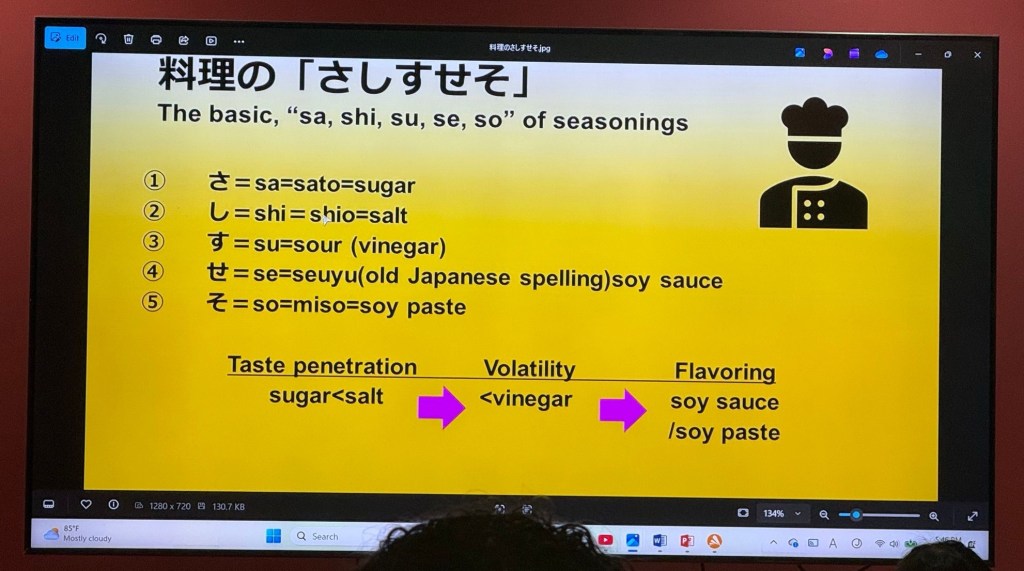
Before we got into the kitchen to cook, our instructed taught us about Japanese sauces, how the Japanese are about balance, and how the order of adding ingredients is important. This reminded me of dinners at my dear friend’s house and his sauces were similarly balanced.
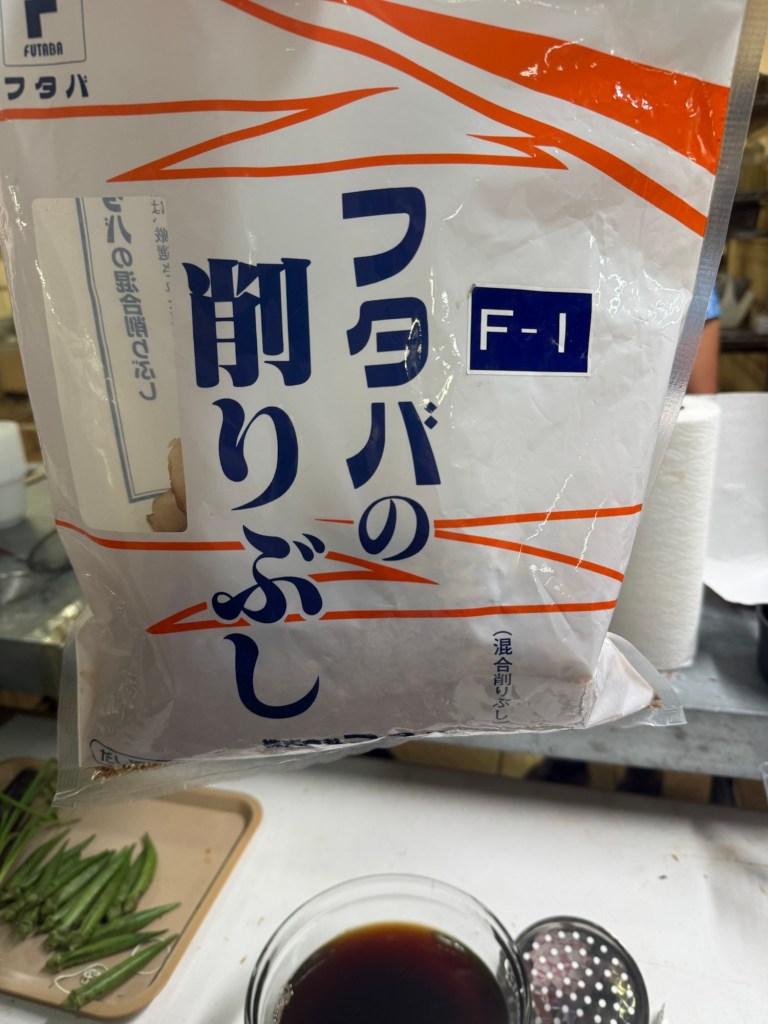
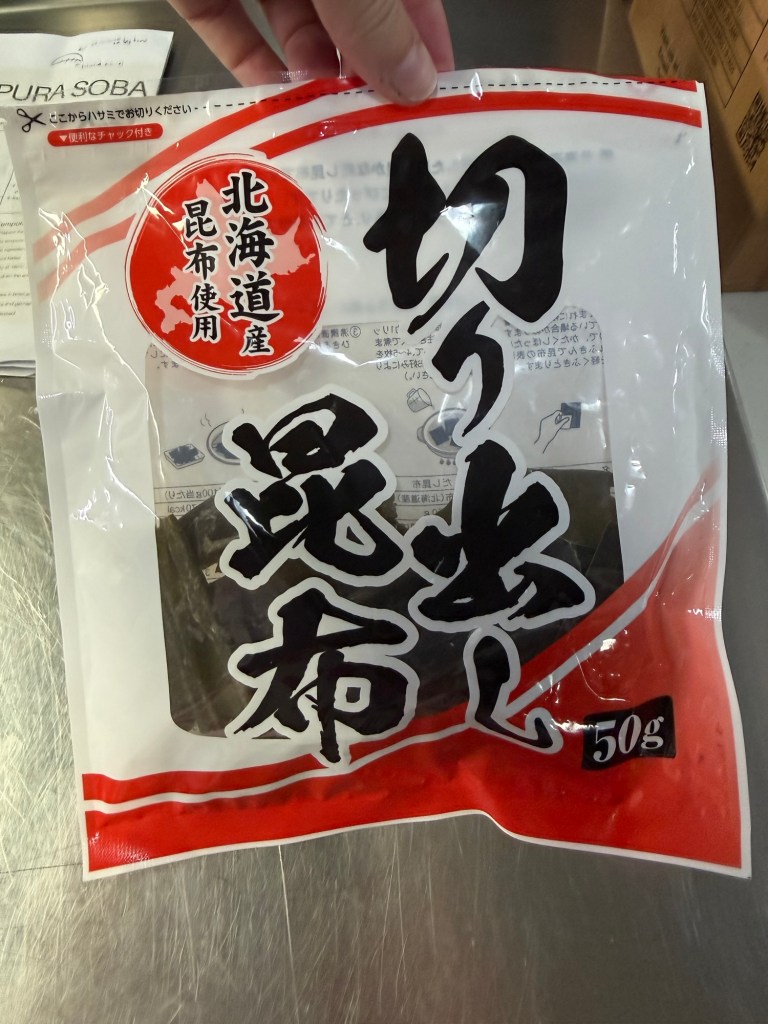
Soba is fairly easy by itself. Simmer ingredients, add noodles. For the broth, you use water that’s been cooked with kelp, then add dashi, soy, etc. The fun part is the tempura, of course. You know how when you get tempura shrimp they are sometimes completely straight? Ever wonder how they get a curled shrimp to do that? Well, I know now, because I did it! It boils down to a few tiny score marks in the shrimp and then basically cracking its “back.” Like a little shrimp chiropractor. And then frying anything in tempura batter makes it 100 times more tasty, especially okra. We used buckwheat noodles, added the soba broth, and topped it with tempura.
Lessons Four & Five: Bento Box
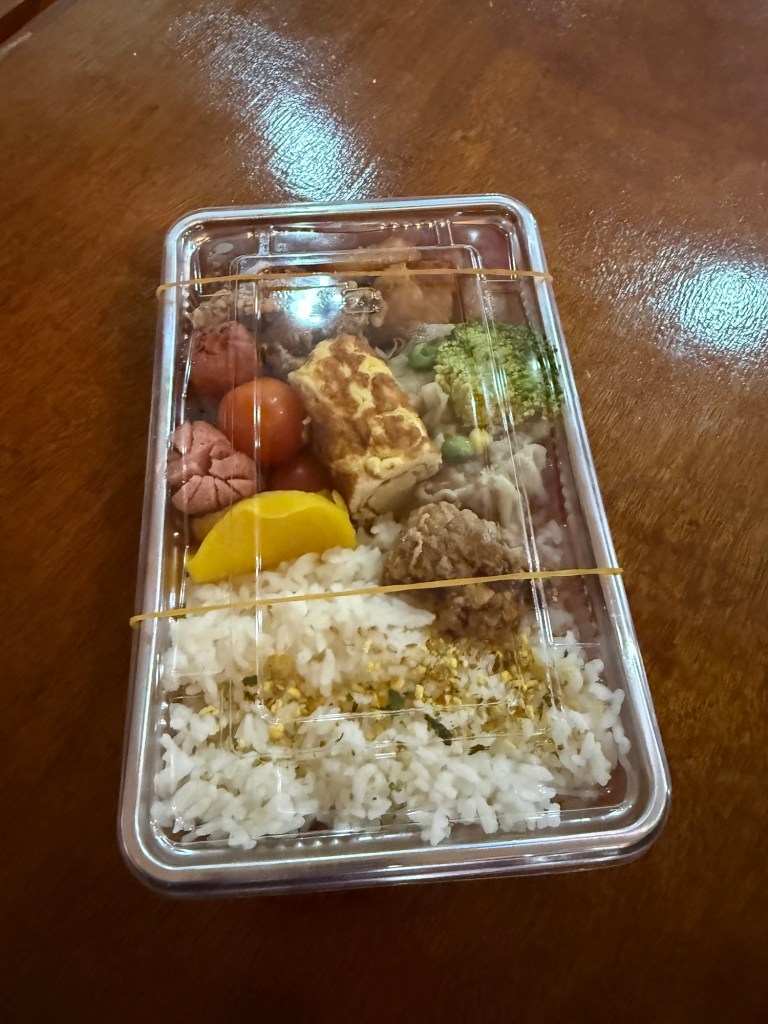
Lesson four was prep for the bento, which came together lesson five. Our box had karaage chicken and fish teriyaki as main dishes, with a Japanese egg roll, pork shumai, and rice as a side. Oh! And don’t let me forget the hot dog. Yes, you read that correctly, a hot dog in a Japanese bento.
Karaage chicken is a marinated chicken that is then dipped in a little potato starch and fried. The marinade is ginger, garlic, soy, cooking sake, sugar, and sesame oil. It’s a lovely flavor without being too much of any one thing.
Fish teriyaki is simply a fish filet sautéed with some soy and mirin. It sounds like nothing, and yet I could eat it every day. And with my proximity to fish, I just might!
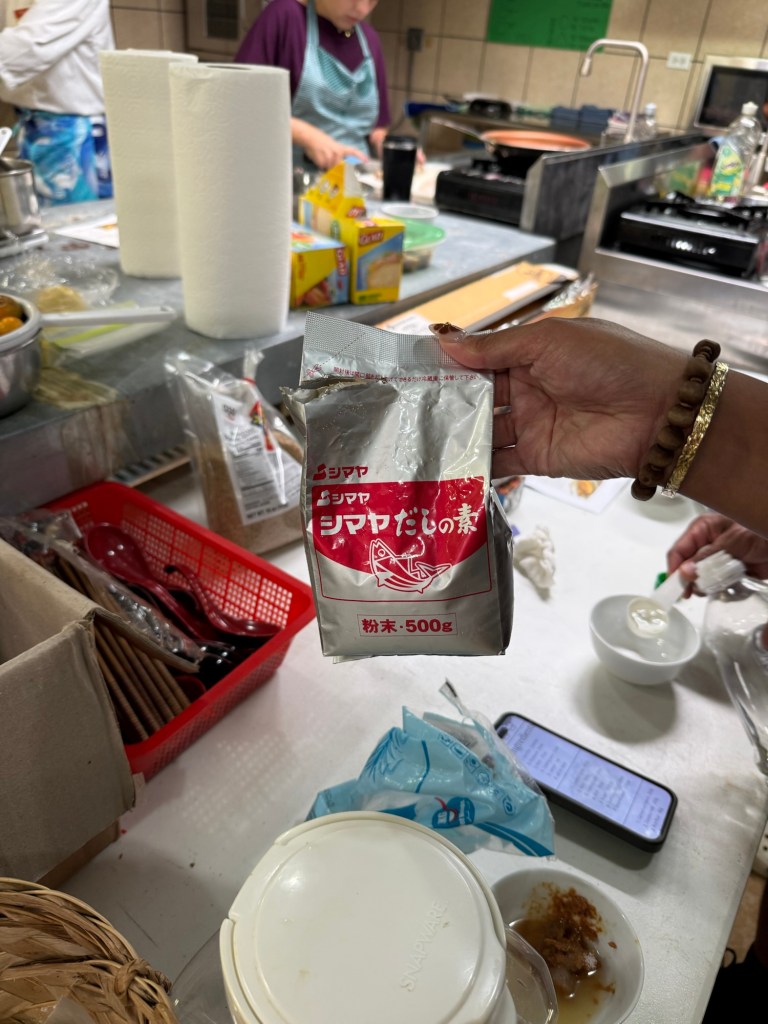
The Japanese egg roll sounds simple, but it tricky to make. It’s simply egg with dashi powder and water. Whisk it up and cook it. The cooking is the tricky part. You pour 1/3 of your egg mixture in and let it cook a little, much like an omelette, but then you start to roll it. Once it’s rolled up, you add more of the mixture, and do the same. Complete the process on the last roll. Slice the roll into however many bites, and then stand it up in your bento. The dashi adds a little touch of pizzazz.
Pork shumai is the hardest, as is anything with a wrapper. It’s a simple enough pork mixture. But you have to wrap it, leaving some open on the top. I have not yet tried it at home, but once I find the wrappers in the store, I plan to.
Which brings us to the hot dog. After all this what seemed like somewhat serious Japanese cooking, I was surprised by the inclusion of the hot dog. It’s pretty simple – you cut the hot dog in thirds, and then cut it so that it looks like a little octopus. Cook it in a hot pan and voila!
Bentos are common around here, and if I get good at some of this, I might even start packing one for Todd for lunch on occasion. We shall see.
Lesson Six: Japan-Palau Fusion
Before we started this lesson, Chef talked to us about the traditional Palauan food, and then the Palauan dish it inspired. Many of the Palauans recognized their food without seeing the Japanese inspiration.
For this lesson we made baked fish, with a Japan-Palau marinade. Then we made taro with a Japanese seasoning. Taro is found throughout Palau and is very popular. It’s a starchy root vegetable. You have to steam or boil it before you can do anything else. For this, we cut the pre-cooked taro into bite sized pieces, then simmered it in a miso based mixture. I’ll be honest, I liked the flavor, but the texture of taro leaves something to be desired.
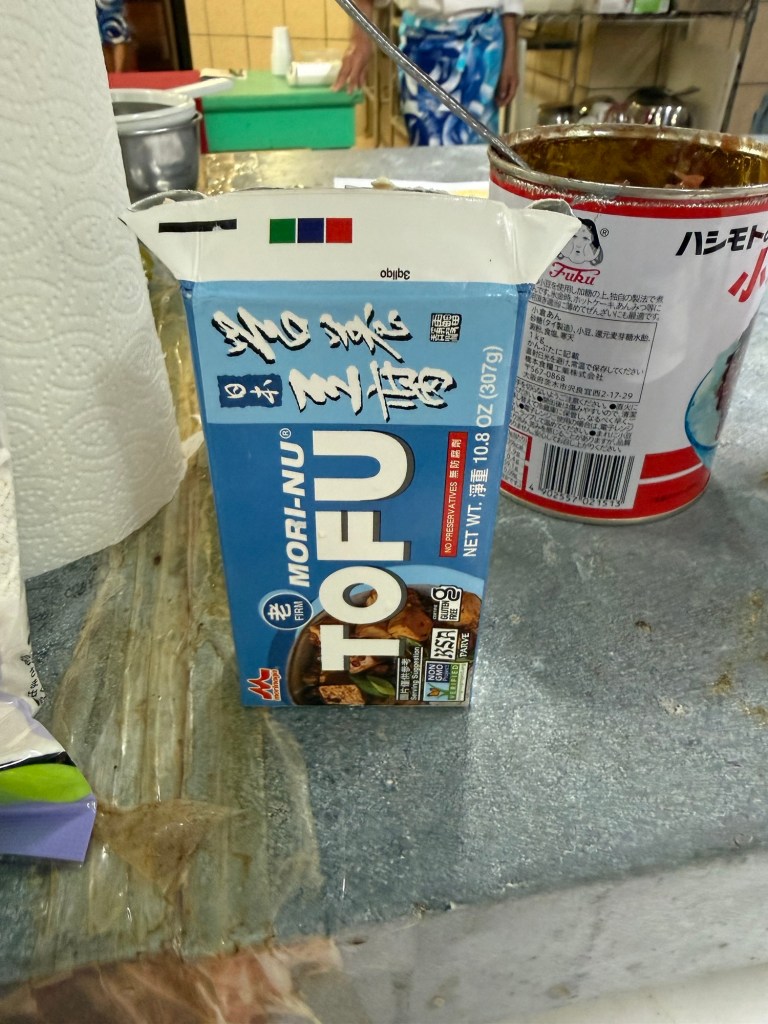
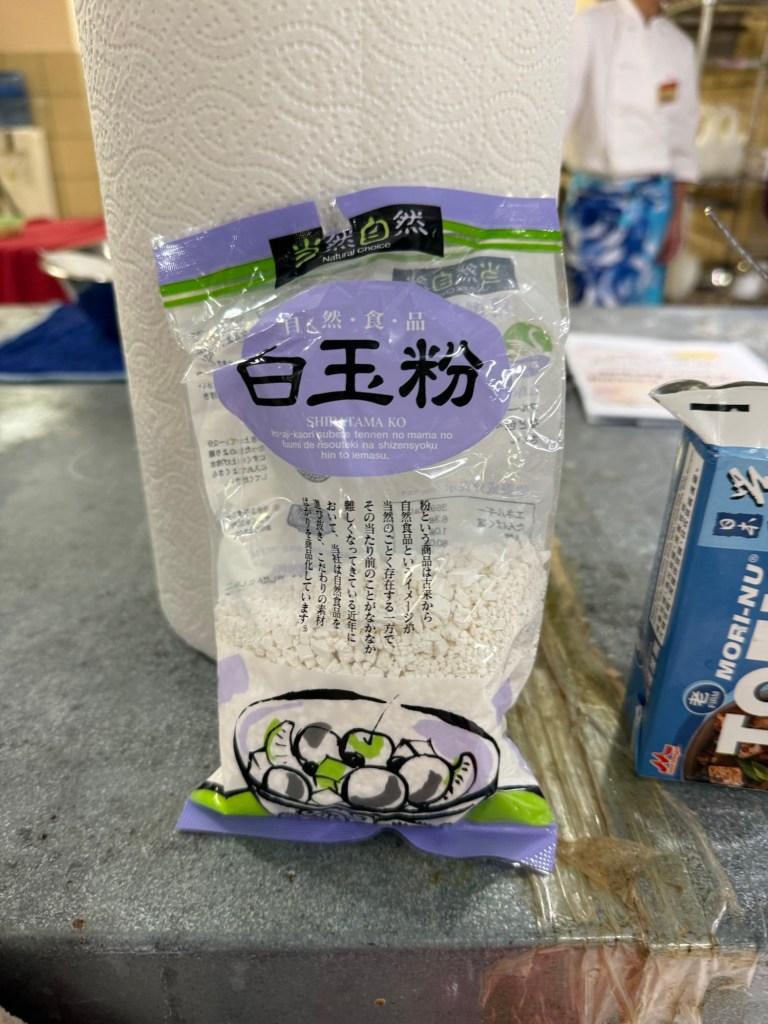
Finally, we made a dessert. We took a special kind of rice flour and mixed it with tofu. Chef said you can also use water, but the tofu helps with the texture, and gives it a little protein, too. You mix those 2 things together and then form little marble sized balls. Boil those until they float, and then put them in ice water. For a sauce, or soup, mix coconut milk and red been paste. Some of us in the class also discussed dipping the balls in caramel, specifically a coconut caramel made here on island.
So that’s it. My big adventure! I will update when I try some of these things here at home and let you know how it goes.


Leave a comment