That’s right, your girl got a job! In news that will surprise no one, it’s in education. I told myself coming here that I should/could try something new. But that’s easier said than done in a foreign country. Most job notices required fluency in both English and Palauan, and that isn’t something I have.
So, I turned to my roots. I am an English Education Specialist. What does that mean? Well, a lot.
My first job responsibility is to help increase literacy in Palau. As with everywhere, they are seeing a decrease in reading scores, probably because these kids are on their phones too much! Also, just finding teachers can be difficult, much less a librarian for each school. Last school year, they did away with school libraries and moved those books out to the classrooms. But, they still aren’t noticing students reading.
Enter me. I’m building my classroom library, slowly but surely, and working with the local library to increase programming, etc. They even have a bookmobile I might get to use!
My second job responsibility is working with teachers grades 5-8. I’m observing them and getting the handle on how things work here. Then I hope to start co-teaching and modeling some lessons.
Schools here are different from the States in many ways, and then similar in others.
First, scheduling. ALL students grades K-8 get a 15 recess/break every day. Lunch is from 12-1 for all students. At the school I’m at the most, the youngest ones eat first, then go outside to play. The older ones play, hang out, and then come in for lunch.
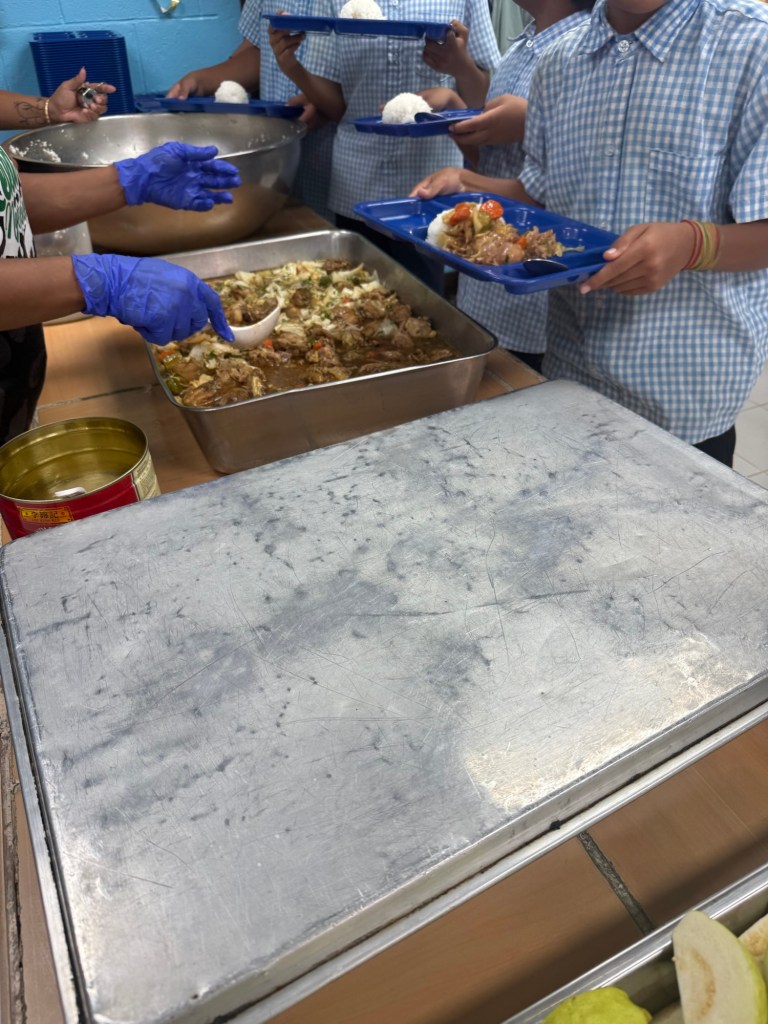
And LUNCH! Wow – what a difference. Fresh food every day. And it’s delicious. You know the food is good when teachers bring their containers to load up after the kids have eaten. Lunch and dinner!
Students here do have Chromebooks, but they are used sparingly. Most work is done on paper, and the kids have the best handwriting I have ever seen. They do have an online book program, and do some research with the Chromebooks. But there’s no online curriculum.
I’ve always said when teaching that kids are kids, regardless of where you teach. But I will say I don’t see as many discipline issues here. Sure, there are some. And there’s the usual middle school drama (crushes, friendships breaking up and making up again, etc), but overall students are respectful and helpful. I do think having time in the day to get outside and run and play is helpful (hint, hint, American schools).
All students, public and private, wear uniforms here. And the females are all in skirts! Some schools it’s just any skirt. One elementary school wears a pinafore. Males are in khakis or black pants and a polo, except at one school where the polo is exchanged for a short sleeve button down. There are most definitely pros and cons to the uniform. According to my boys, it’s nice not to have to think about what to wear. But they also wish they could wear shorts (at their school boys 6th grade and up are required to wear pants). I wish the girls could wear pants or shorts, and not always skirts. The adult women here wear pants often, so I am not sure I understand the reasoning behind the skirts, other than it’s just what they have always done.
The hardest part for me so far has been the language barrier. Palauan is the first language for a majority of teachers and students here. So sometimes when I go into a class, even when they are teaching English, the instructions are in Palauan. Often at work, coworkers have conversations in Palauan, which makes it more difficult for me to chime in (and those who know me, know I love to chime in!). I have yet to meet a person here who doesn’t speak English, though. In fact, one of the teachers told me that in some households, English is spoken more than Palauan.
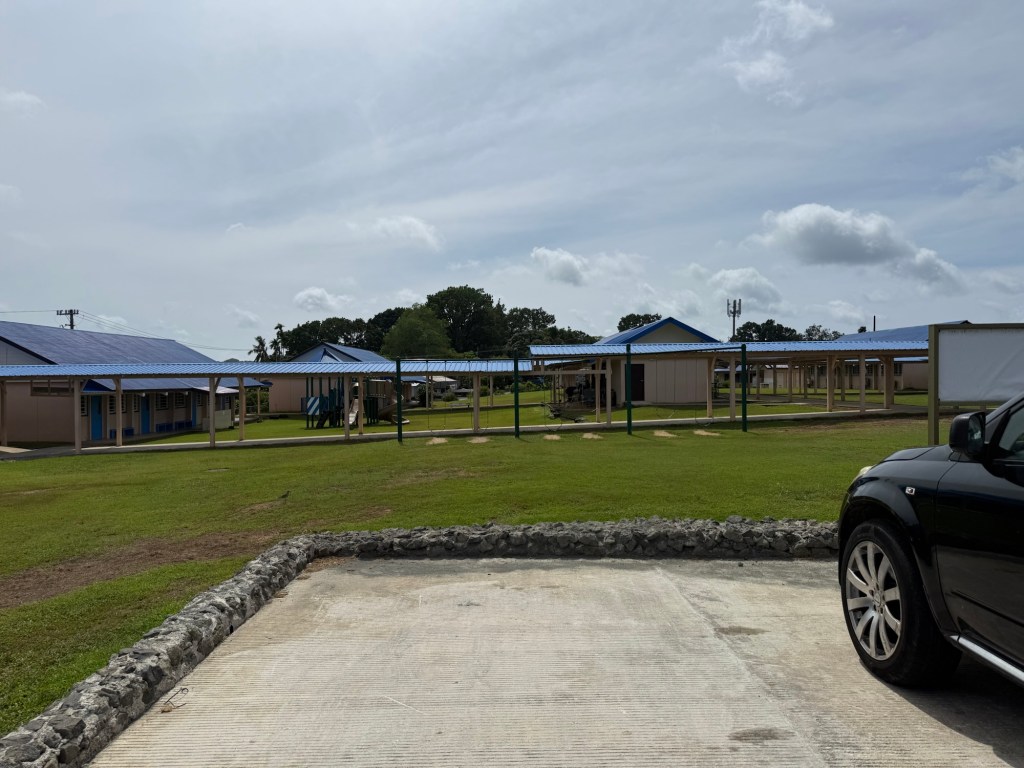
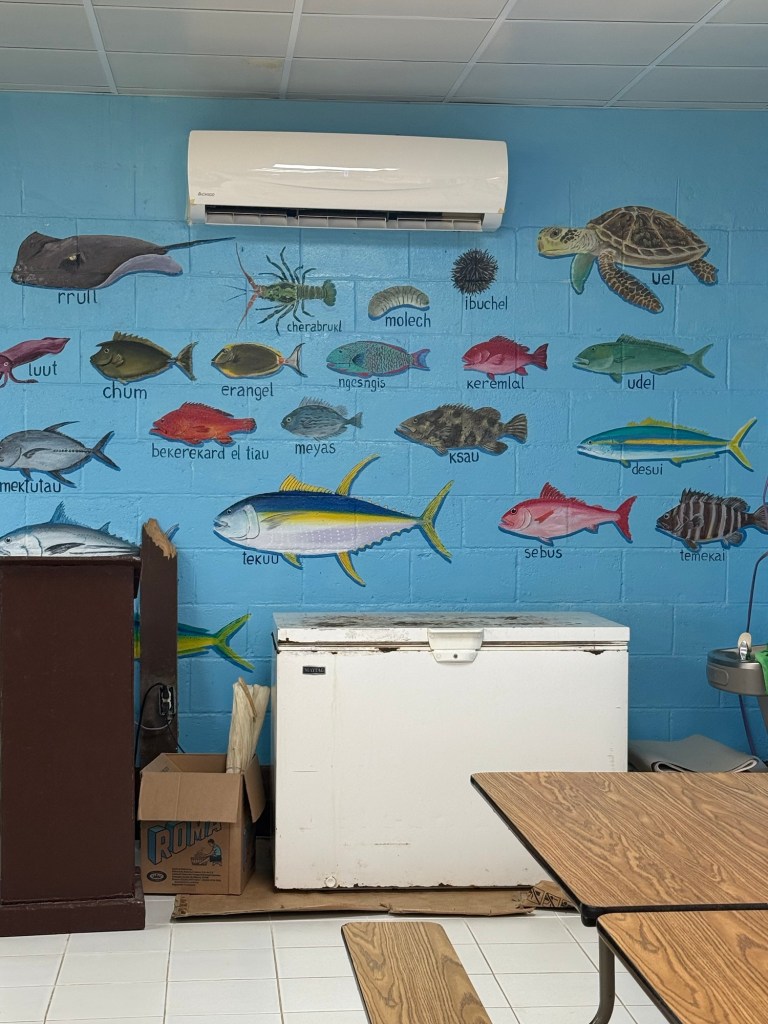
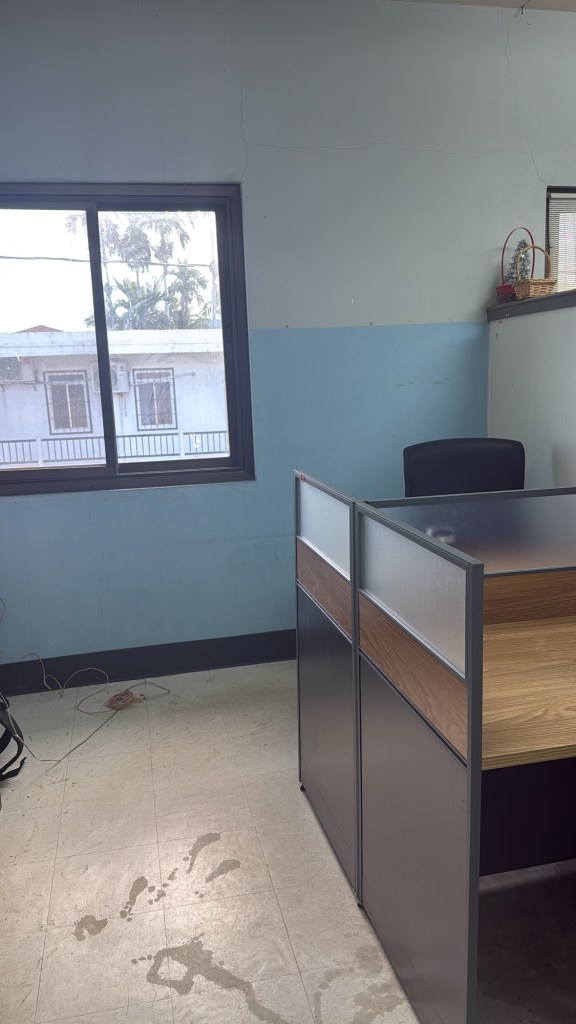
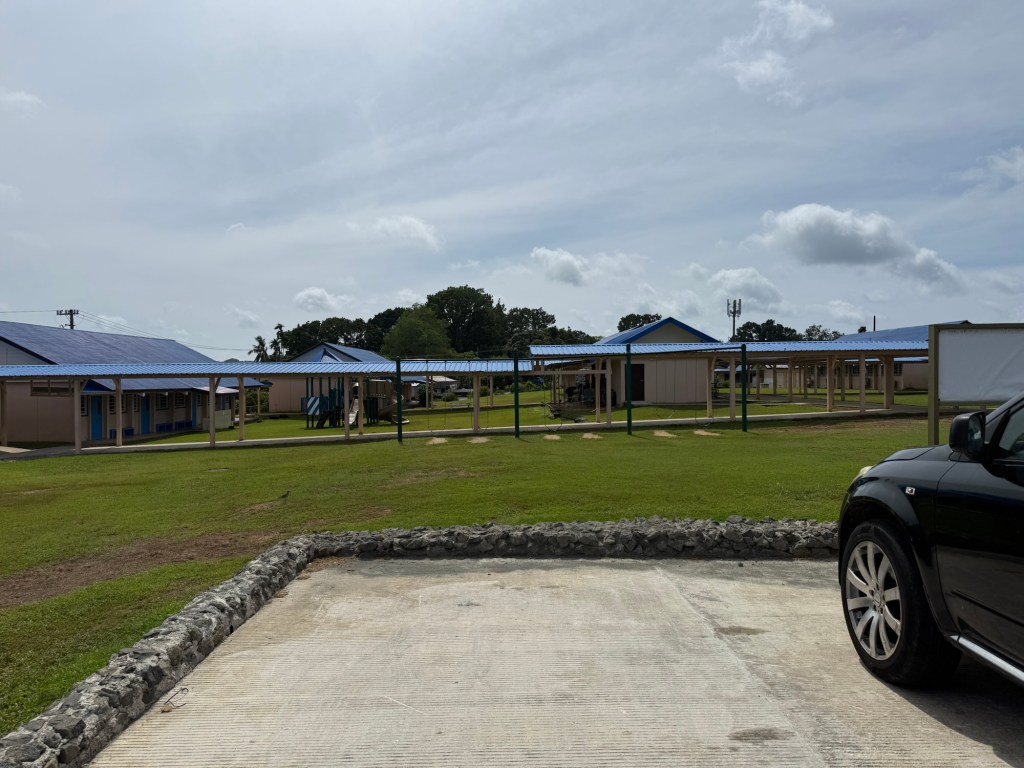
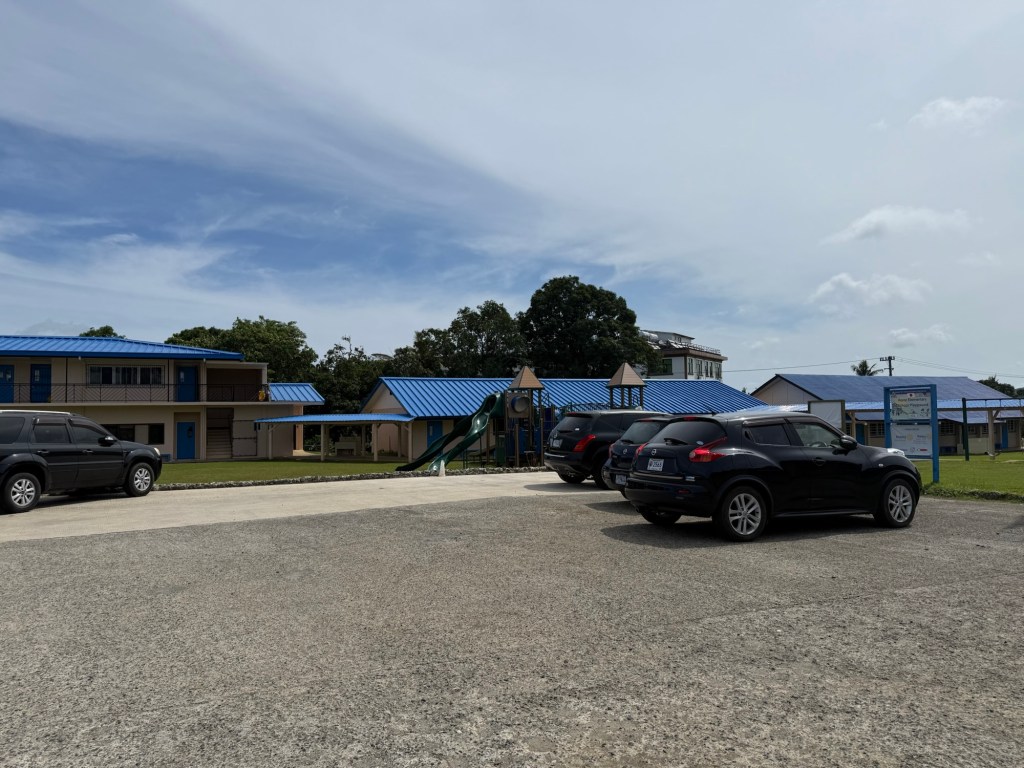
I leave you with a few pictures of a campus. More to come, I’m sure.


Leave a Reply